Category: Field Sports

  • Cooking the bag

    Cooking the bag

    Field Notes · Food & Game

    An old cock pheasant, a knobbly root and two and a half hours of patience.

    Cooking the bag
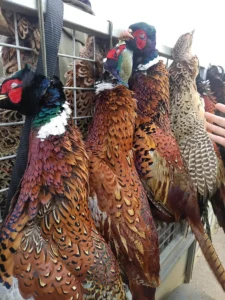
    Pheasant on game cart

    A game cart at the end of the day is a ledger. Everything that happened is laid out in a row, and the question of what happens next has passed quietly from the field to the kitchen. I take a professional interest in both.

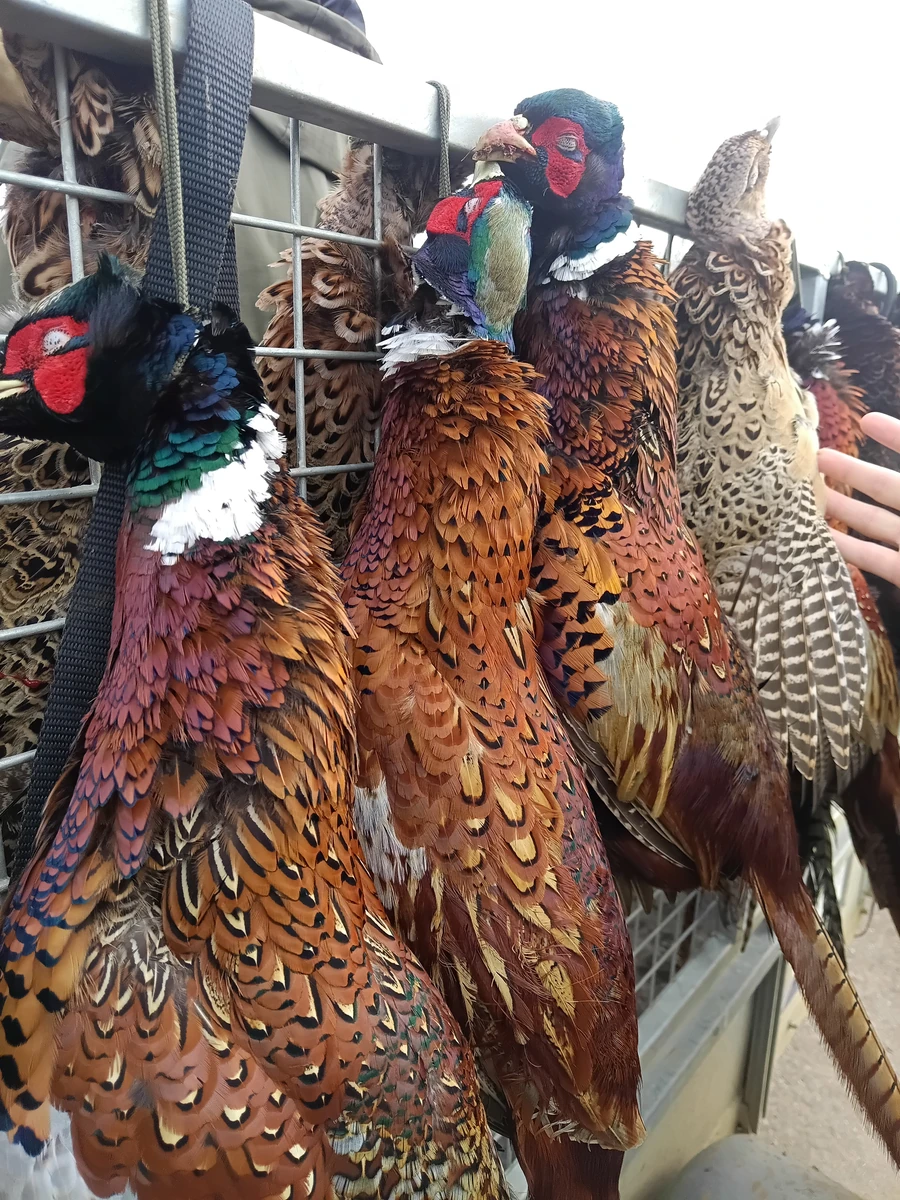
    The cock pheasant is the easiest bird on the cart to name: copper, bottle-green and far too long in the tail to be missed. The hen, in her browns, is better dressed for staying alive. Some say the Romans brought them to Britain. I note the “some” and leave it there.
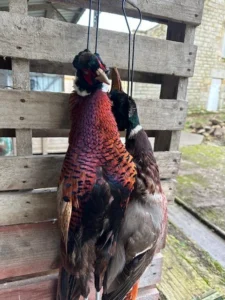
    Cock pheasant and drake

    Young or old?

    The kitchen needs one answer first: how old is the bird? Angela Humphreys, writing on game cookery in Complete Rough Shoot, points to the legs. A young cock has rounded spurs that sharpen with age; on a hen, feet that begin supple and grow coarse. Hanging comes next: about three days in warm weather, up to a fortnight in cold.
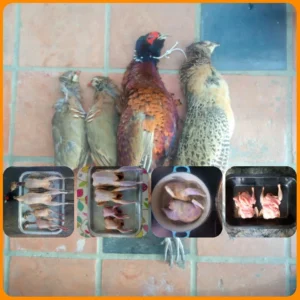
    Brace of pheasant and brace of partridge

    Young birds earn the showy treatment, roasted and sent out with bacon rolls, fried breadcrumbs or game chips. Old birds do not. By January the bag is heavy with mature cocks, because the hens are spared to stock the next season. Roast one of those and you will learn a good deal about perseverance.

    The patient answer

    Her answer for the old cock is slow cooking, with a root I would not have looked at twice. Celeriac tastes of celery, cooks beside the bird and is then blended to thicken the sauce. No flour, only time.
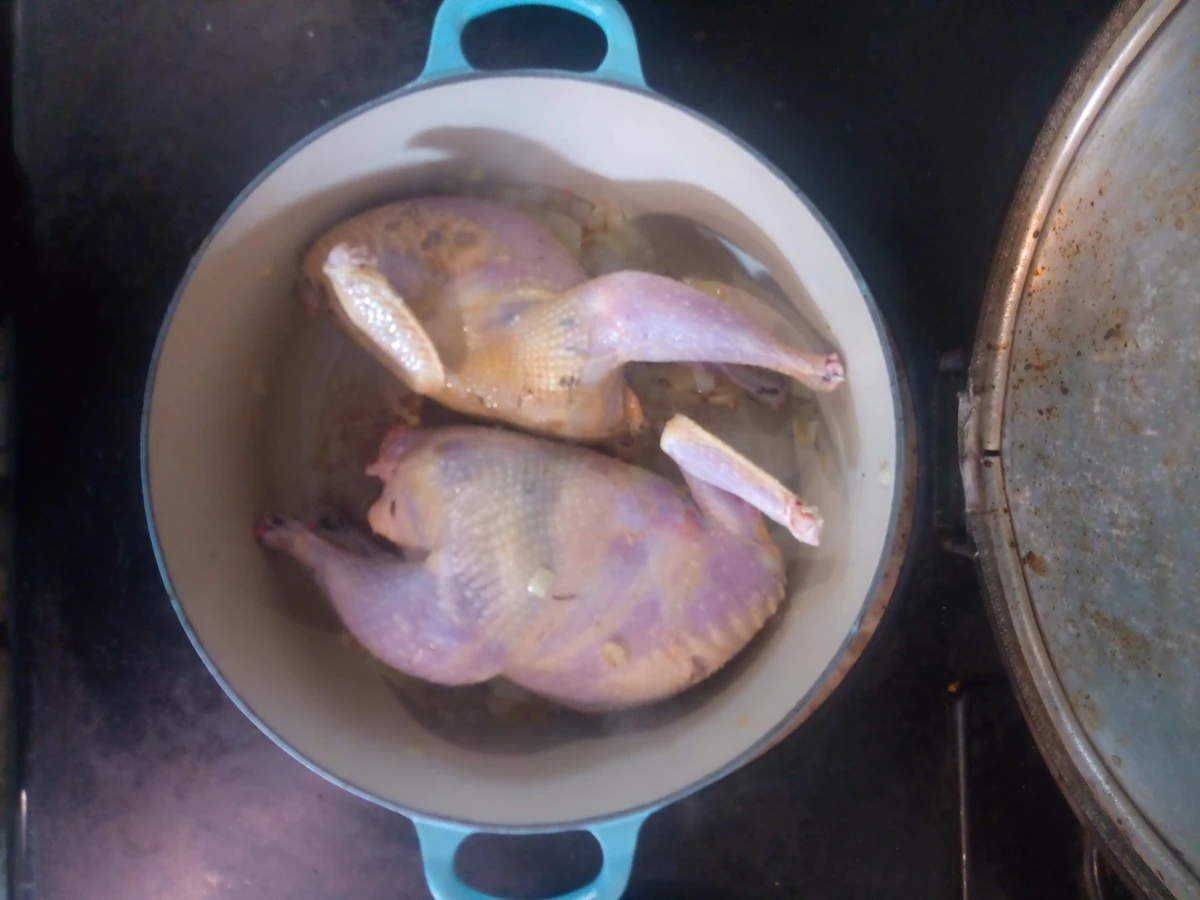
    Braising pheasants in casserole

    Pheasant with celeriac sauce (serves 4)

    • 1 mature cock pheasant
    • 675g (1½lb) celeriac, peeled and sliced
    • 300ml (½pt) chicken stock
    • 150ml (¼pt) white wine
    • 2 cloves garlic, crushed
    • 4tbsp single cream
    • Salt and black pepper
    • 225g (8oz) fromage frais
    • Chopped chives
    1. Sit the bird breast down in a flameproof casserole with the stock, wine, garlic and seasoning. Cook at 160°C/325°F/gas mark 3 for 1½ hours.
    2. Lift out the bird and add the celeriac. When it is cool enough, take the breast off in large pieces and keep the legs and wings whole.
    3. Return the meat and cook for about an hour more, until the celeriac is tender. Keep the meat warm in a shallow dish.
    4. Purée the celeriac, return it with the cream, warm gently and season.
    5. Stir the chives into the fromage frais. Spoon the sauce over the meat and serve with glazed carrots and jacket potatoes topped with the fromage frais.

    It is a recipe that rewards a bird for surviving several seasons, which seems fair. Whether the bird would agree is another question.

    Image credits: [shared credit to confirm]. Recipe adapted from Angela Humphreys, “From Bag to Table”, in Complete Rough Shoot.
  • The Complete Rough Shoot

    The Complete Rough Shoot

    Field Notes · Books & Ideas

    John Humphreys’ book invites a closer look at the countryside, and at the human habit of calling our arrangements a balance.

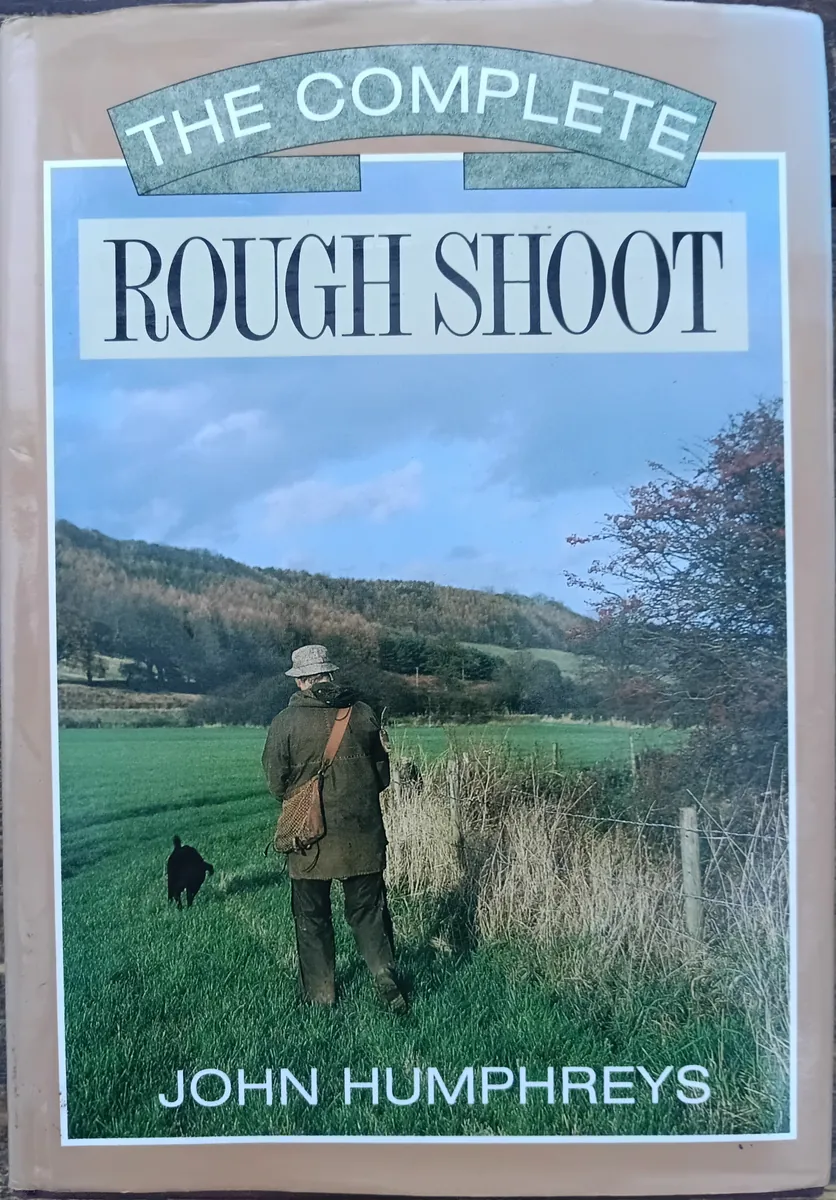
    Cover of The Complete Rough Shoot by John Humphreys, showing a man and dog in a field.
    The Complete Rough Shoot

    A game bag containing sandwiches, beer, a dog lead and dead rabbits is an unusually honest statement of purpose. Lunch and supper, with the means of getting between them. I find it rather more persuasive than a catalogue of expensive coats.

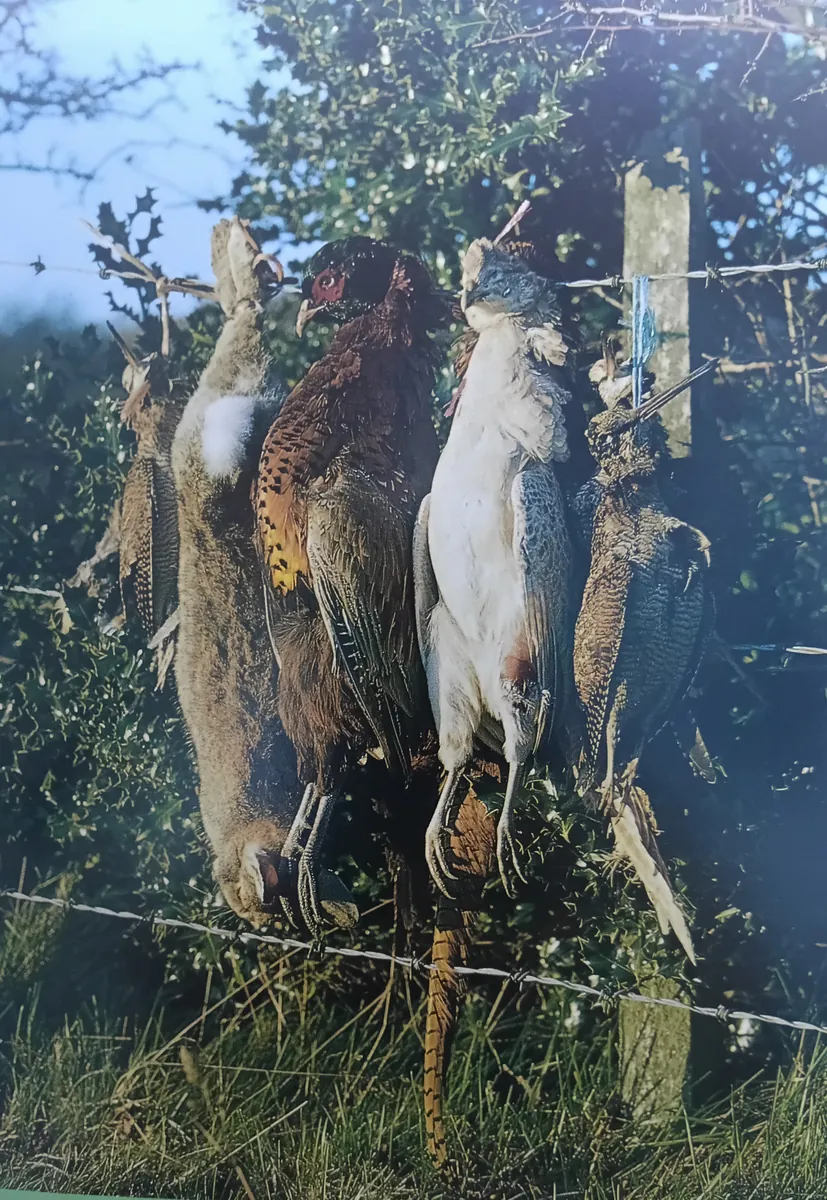
    Mixed game birds and rabbits hanging on a wire fence.
    Mixed bag

    In The Complete Rough Shoot, John Humphreys presents a countryman who walks, finds his own quarry and carries what he takes. The dog works beside him. Competence matters more than display; the day asks something of its participant beyond turning up.

    The book’s range is part of its appeal. Moor, marsh, stubble and hedgerow each demand different knowledge. Country life emerges as a relationship with places and seasons, rather than a single sporting occasion. Its movement from field to kitchen, including Angela Humphreys’ From Bag to Table, completes the thought: what is taken becomes food.

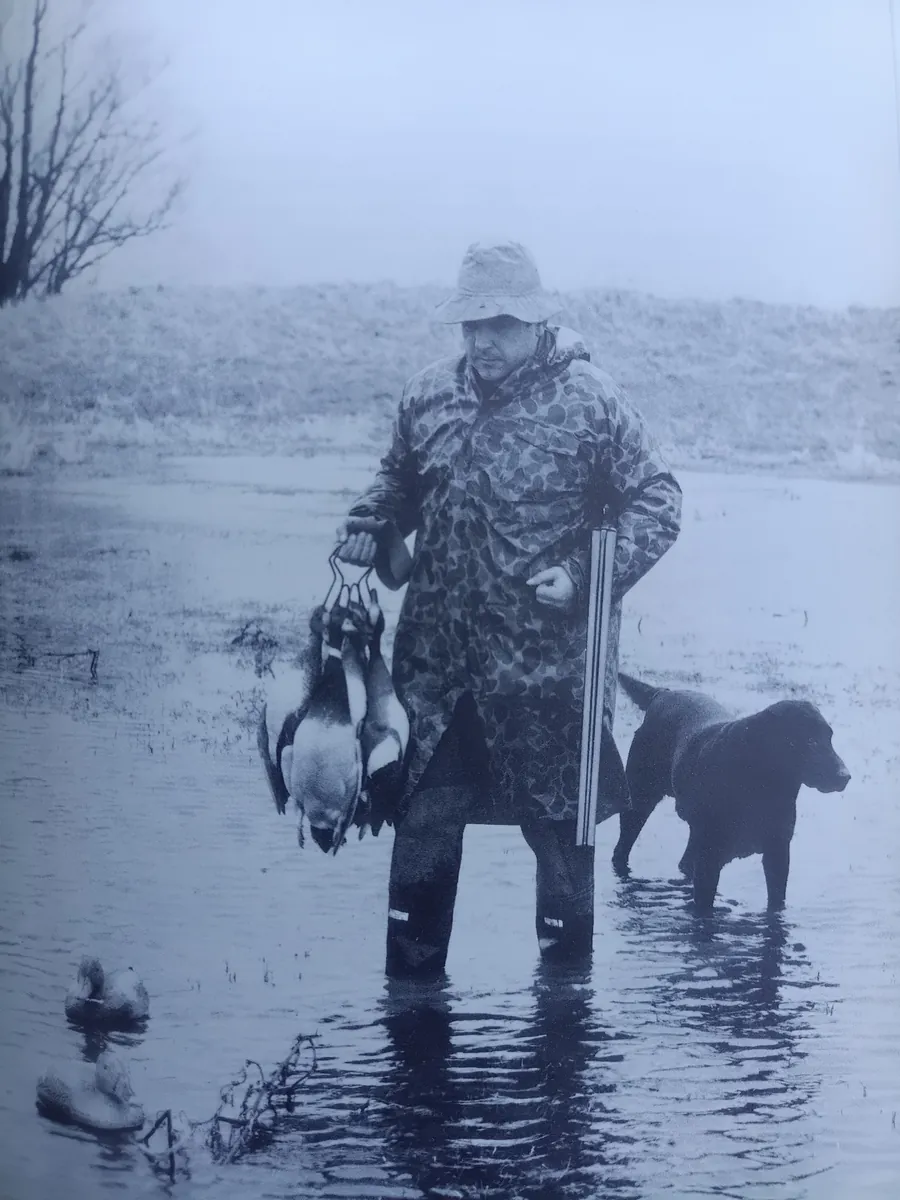
    A wildfowler standing in water with a dog and birds carried at his side.
    Wildfowling
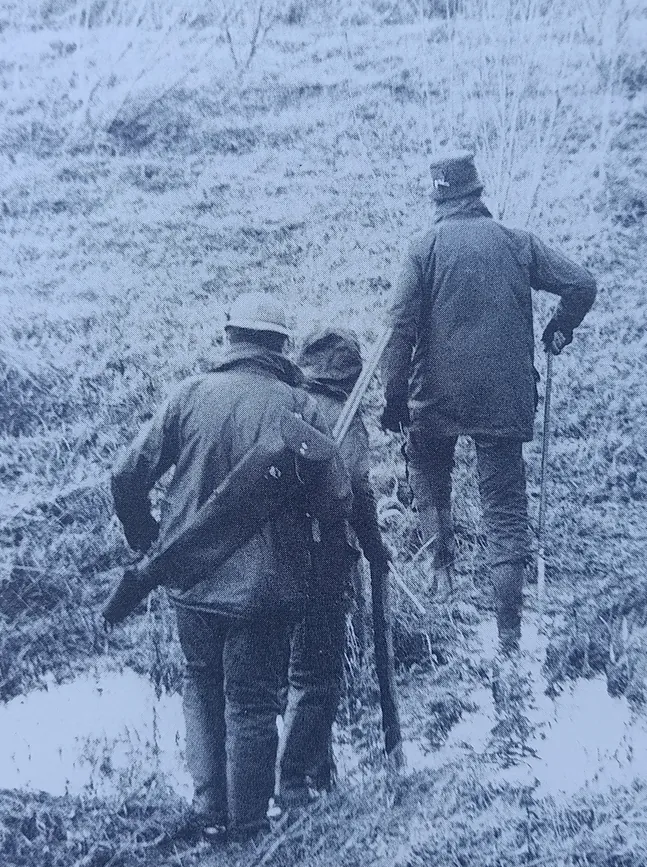
    Two people with guns walking on a hillside.
    On the hill

    A fox can recognise the attraction of that economy. We have our own views on rabbit, though fewer opinions about the accompanying wine.

    But there is a complication beneath this pleasing picture. The countryside through which the rough shooter walks has already been shaped by human needs. Crops, boundaries and decisions about which creatures are welcome make a landscape that serves some lives better than others. To belong to it is not automatically to leave it undisturbed.

    That makes balance a question to keep asking, rather than a condition to declare achieved. What does this place support? What has been displaced? What are we taking, and what are we allowing to remain? A modest bag may express restraint, but modesty alone cannot answer every question about the land around it.

    The book also carries the tastes of its world. Its discussion of well-hung, or “high”, game makes the journey from bag to table feel less familiar to a contemporary reader. Tradition reaches into the larder as well as the field. I would treat that passage as a glimpse of an appetite, rather than instructions for supper.

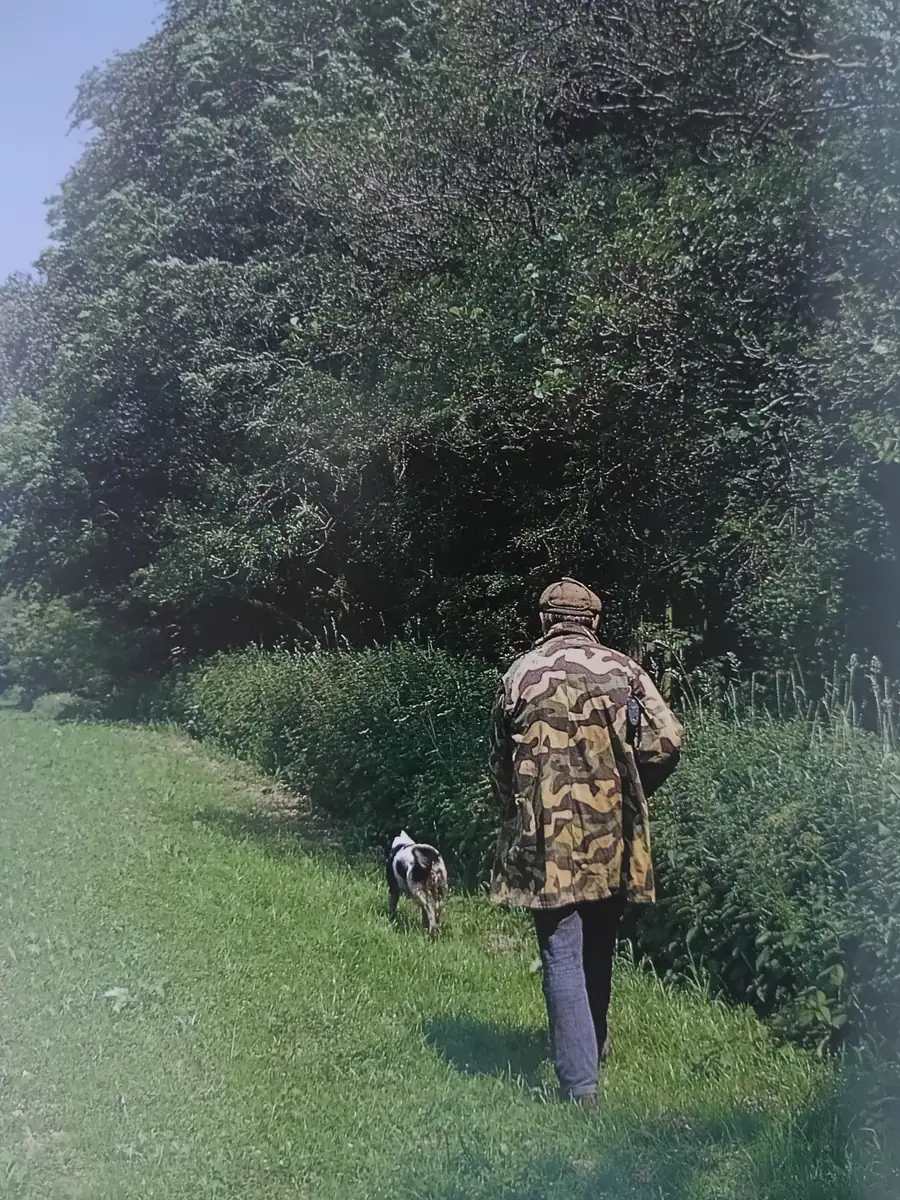
    A person and dog walking beside a leafy hedgerow.
    Walking up the hedgerow

    What stays with me is the demand for attention: to the ground, the season, the dog and the meal. It offers a useful starting point for living with nature, provided we keep examining the terms of the relationship.

    Rough shooting is a way of living with nature, not a trip to the country.

    Image credits: John Humphreys, Jack Parfitt and Jack Barnard.